About us
From rubber raw material zones to multi-sector operations in Gia Lai

From rubber raw material zones to multi-sector operations in Gia Lai
01Positioning
Quang Duc operates in Gia Lai on the foundation of agriculture and export, expanding into processing, livestock, infrastructure construction and energy. Production is located right in the raw material zone.
Legal information
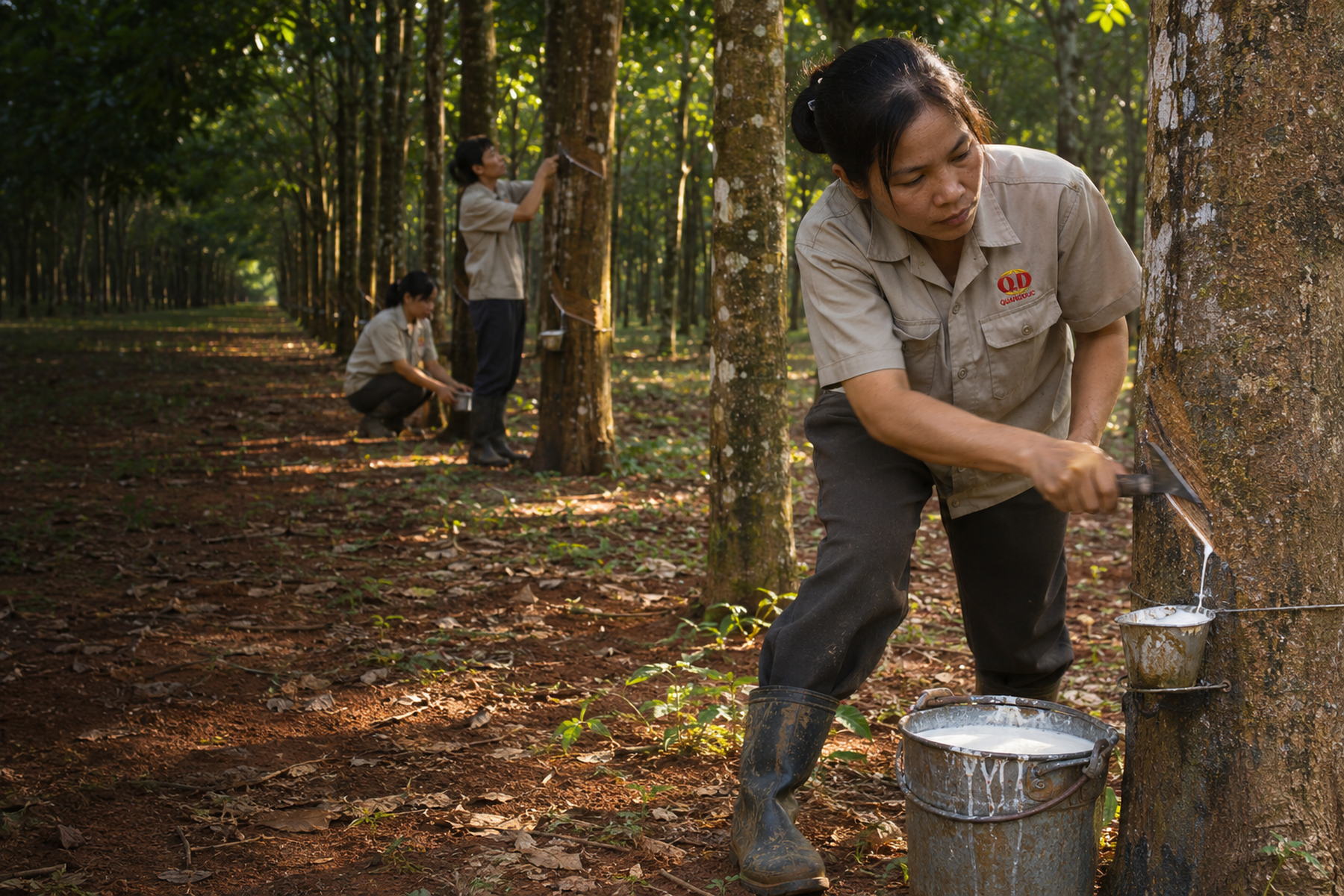
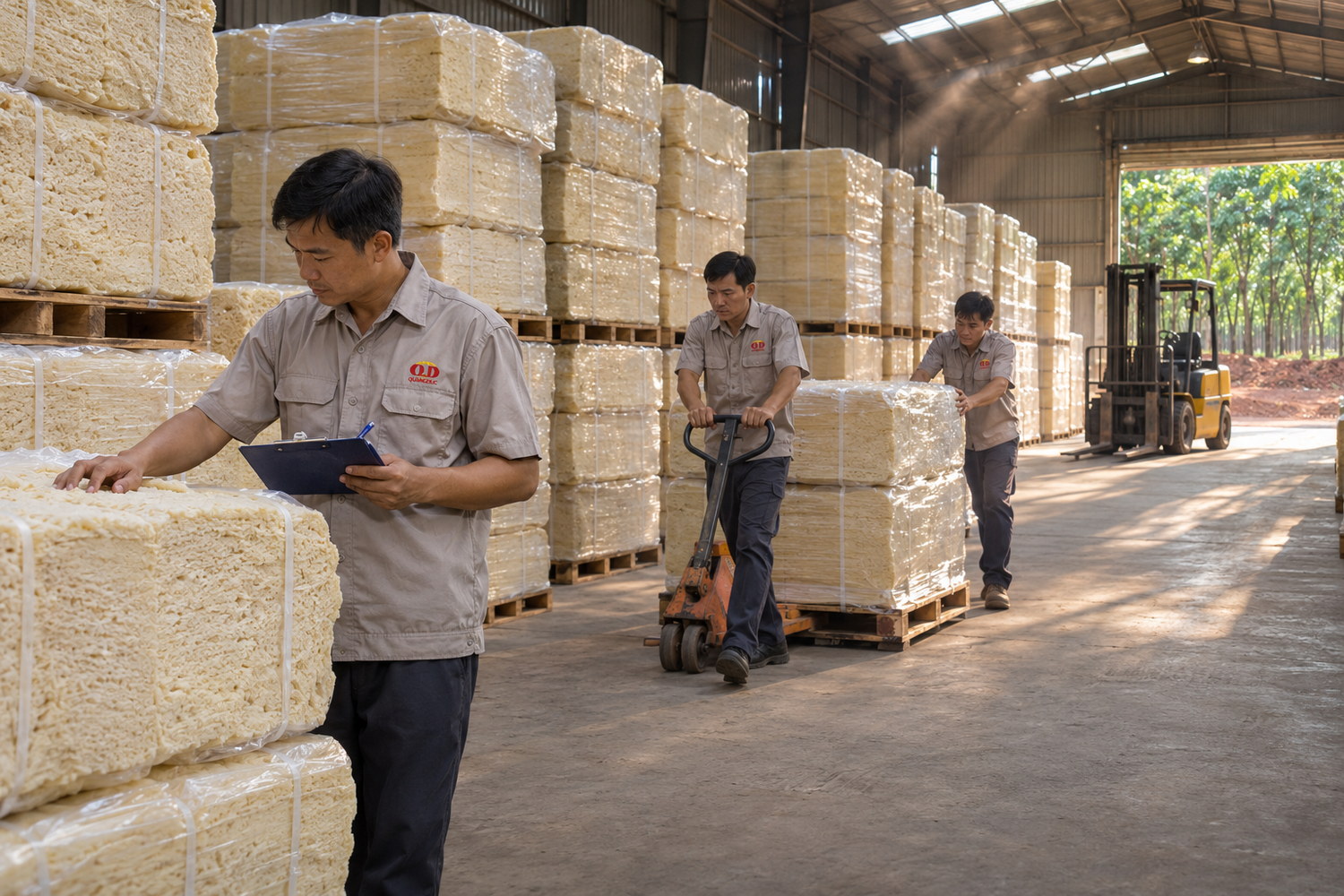
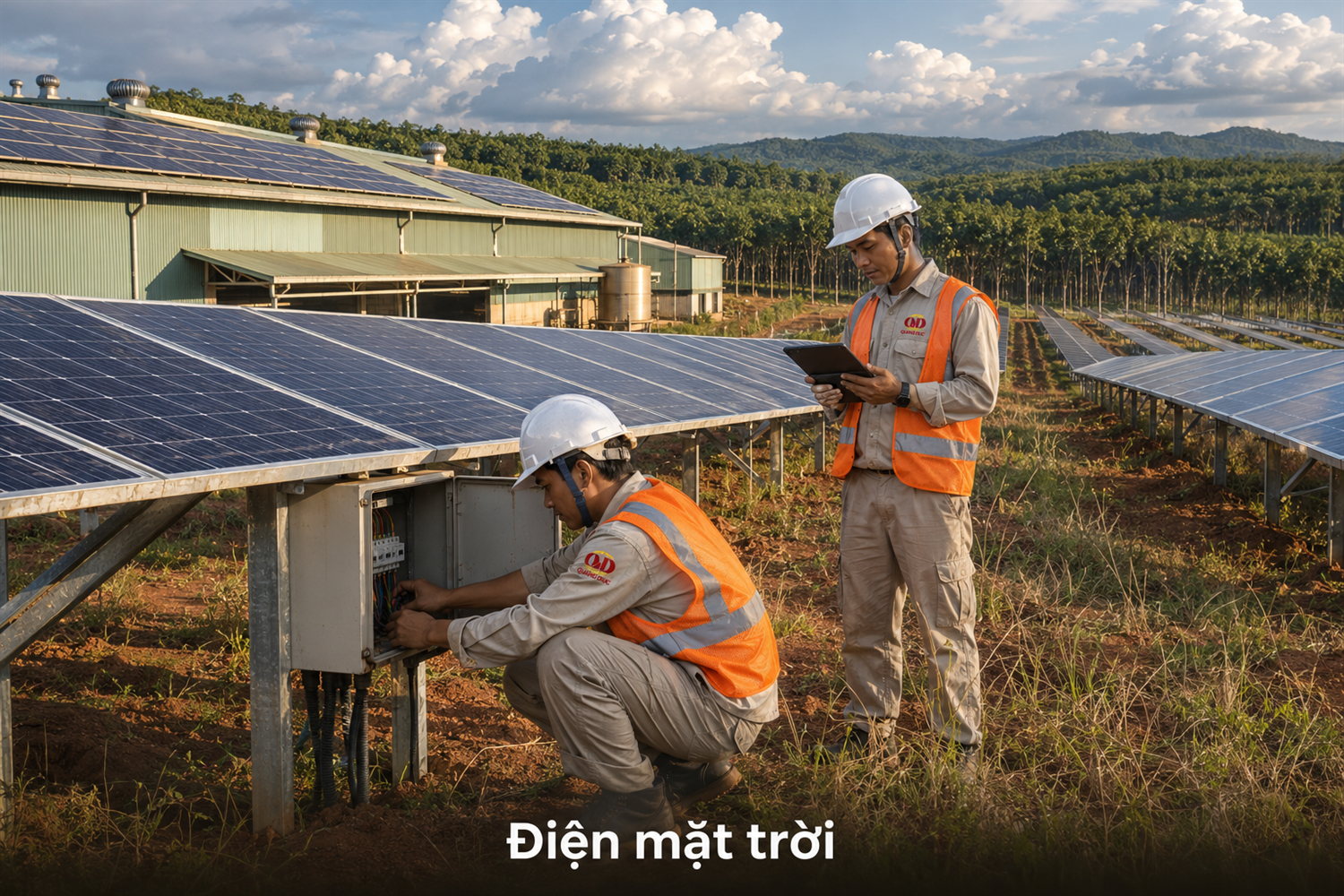
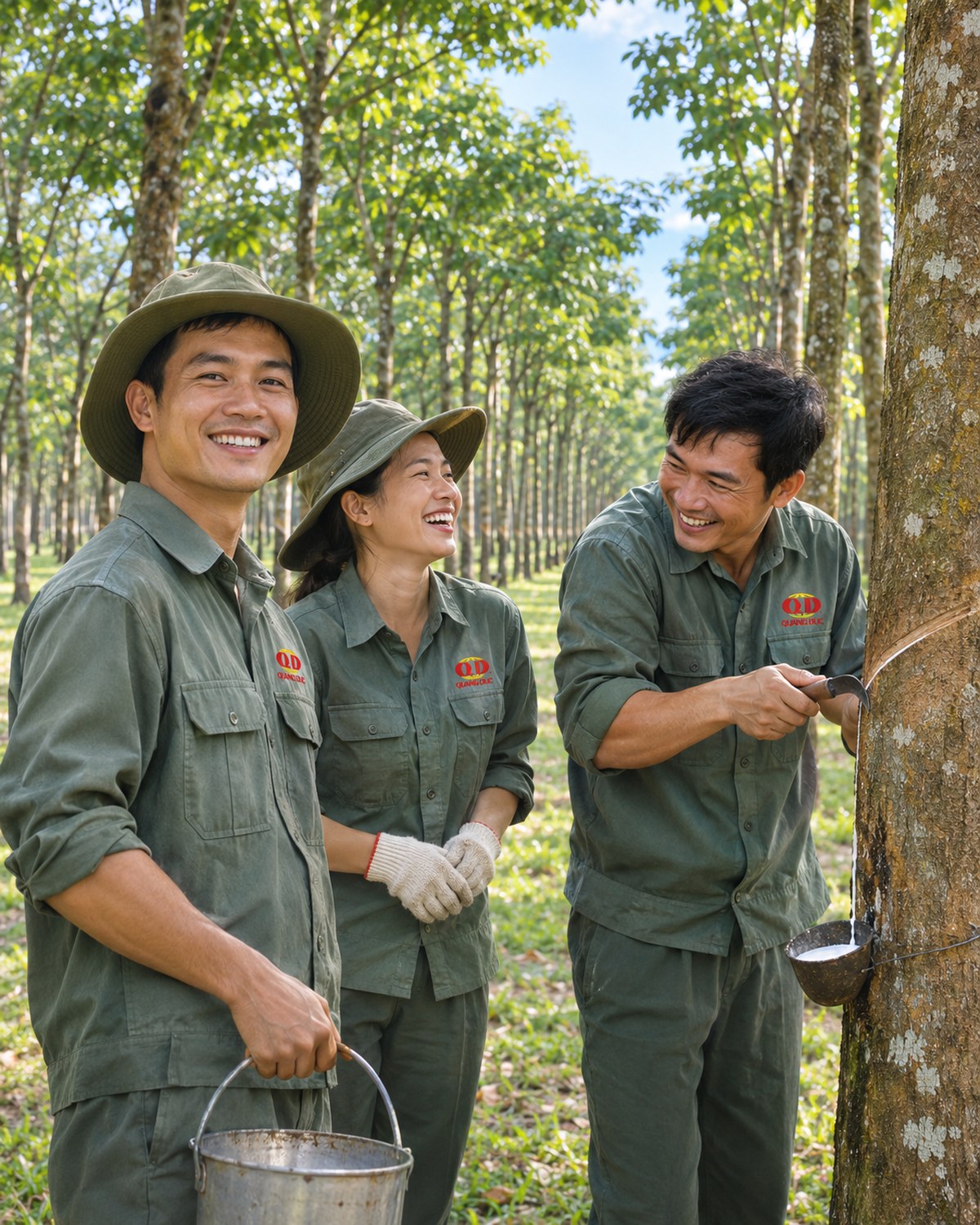
Raw material, rubber bales and energy in Gia Lai — illustrative photos.
Current scale
25+years
Production experience
9.000ha
Industrial crops
15units
Affiliated
51.000m²
Latex processing plant
02Business sectors
Connected sectors form one value chain, from raw-material zones to the market.
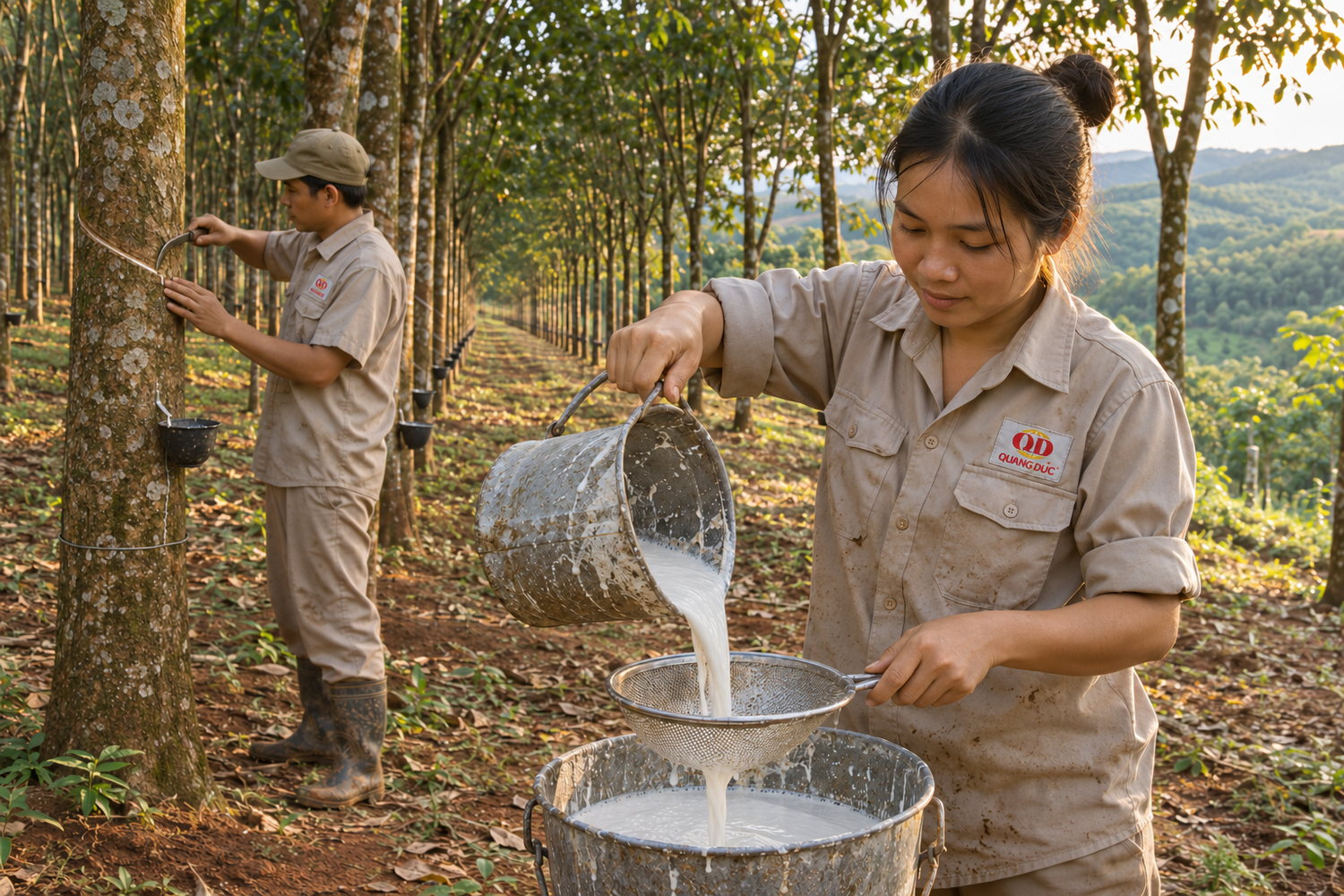
Raw material
The sector most closely associated with Quang Duc, starting from agricultural raw materials in Gia Lai.
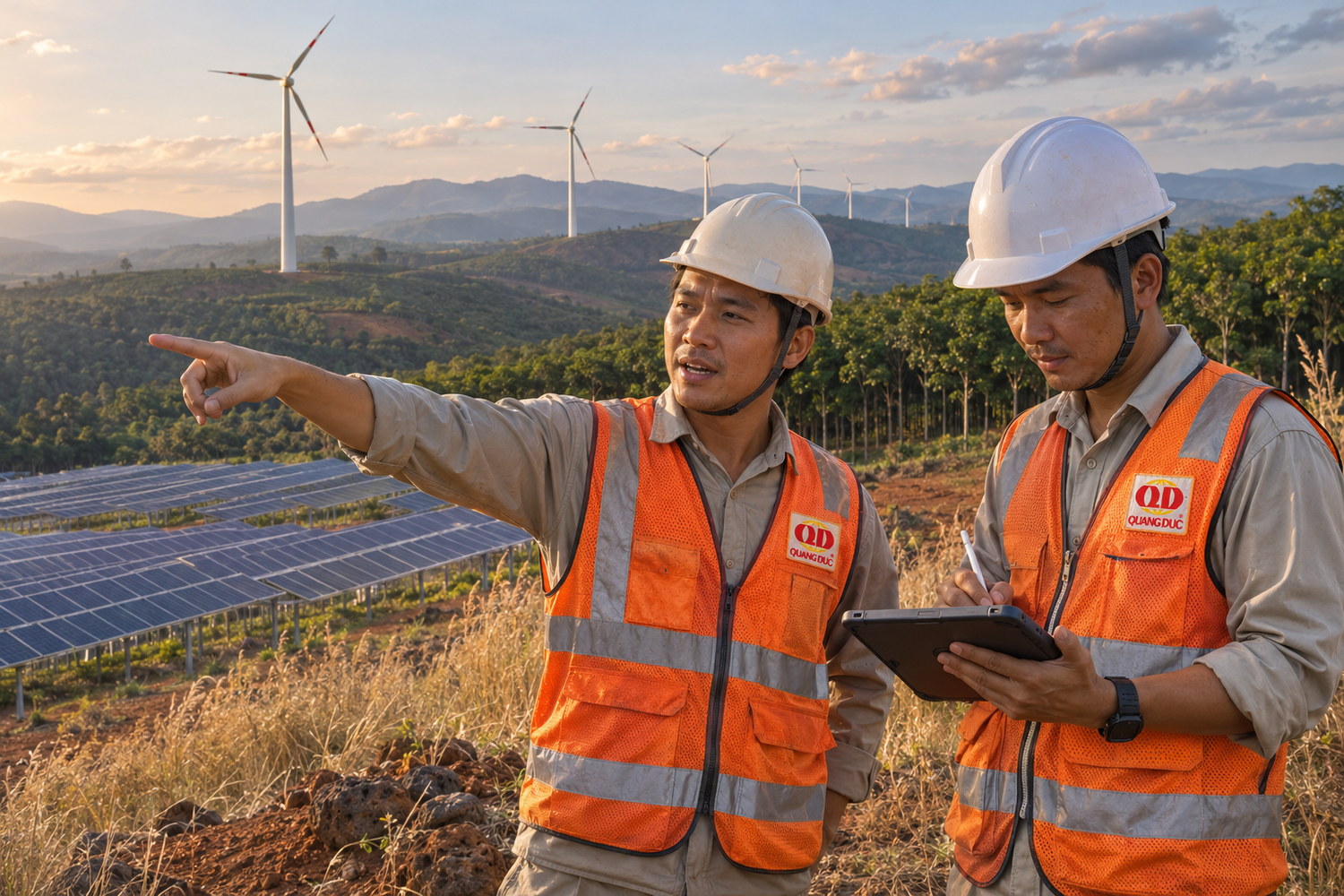
Wind & solar power
A long-term investment direction linked to the strong wind and solar radiation potential of the Central Highlands – South Central Coast region.
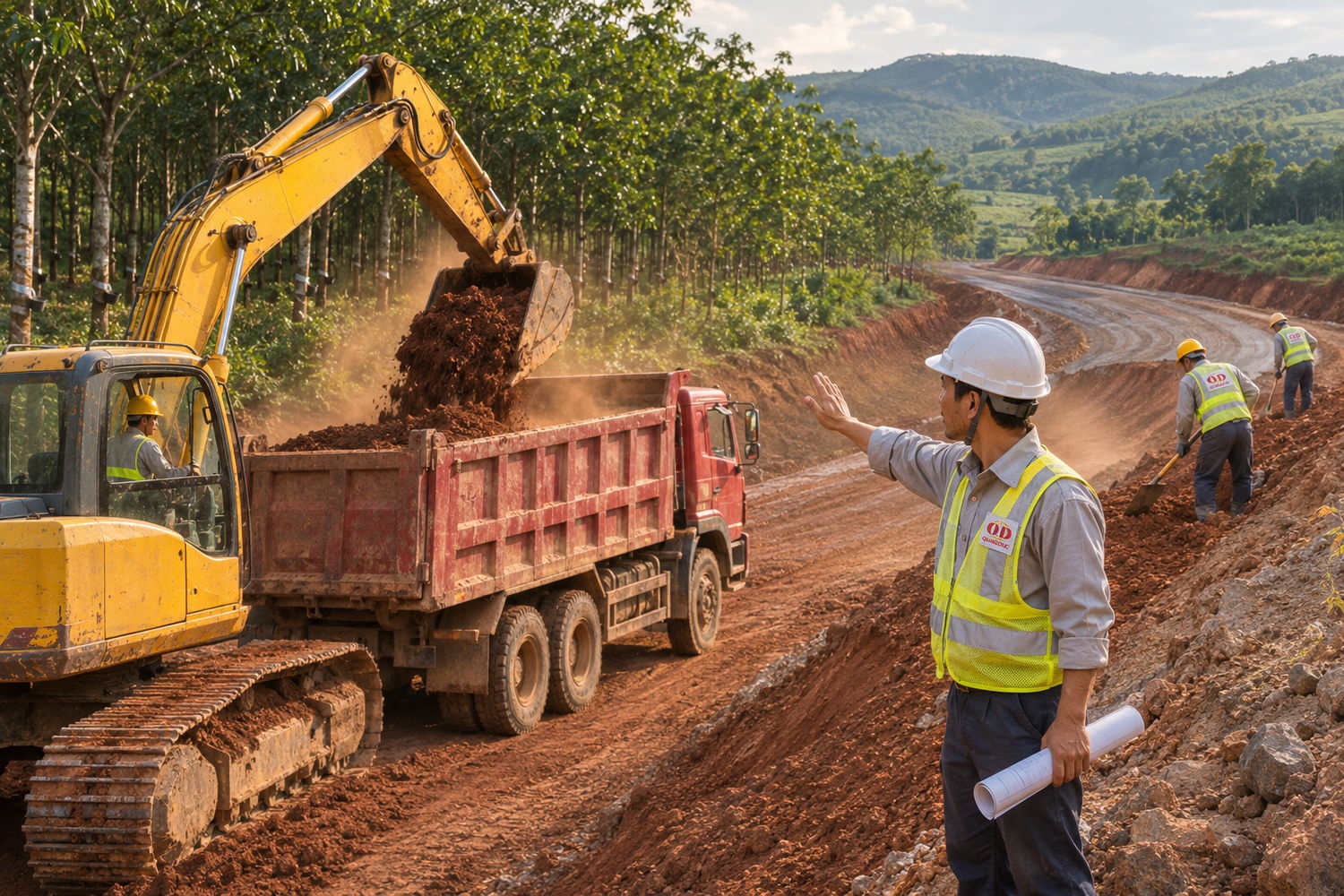
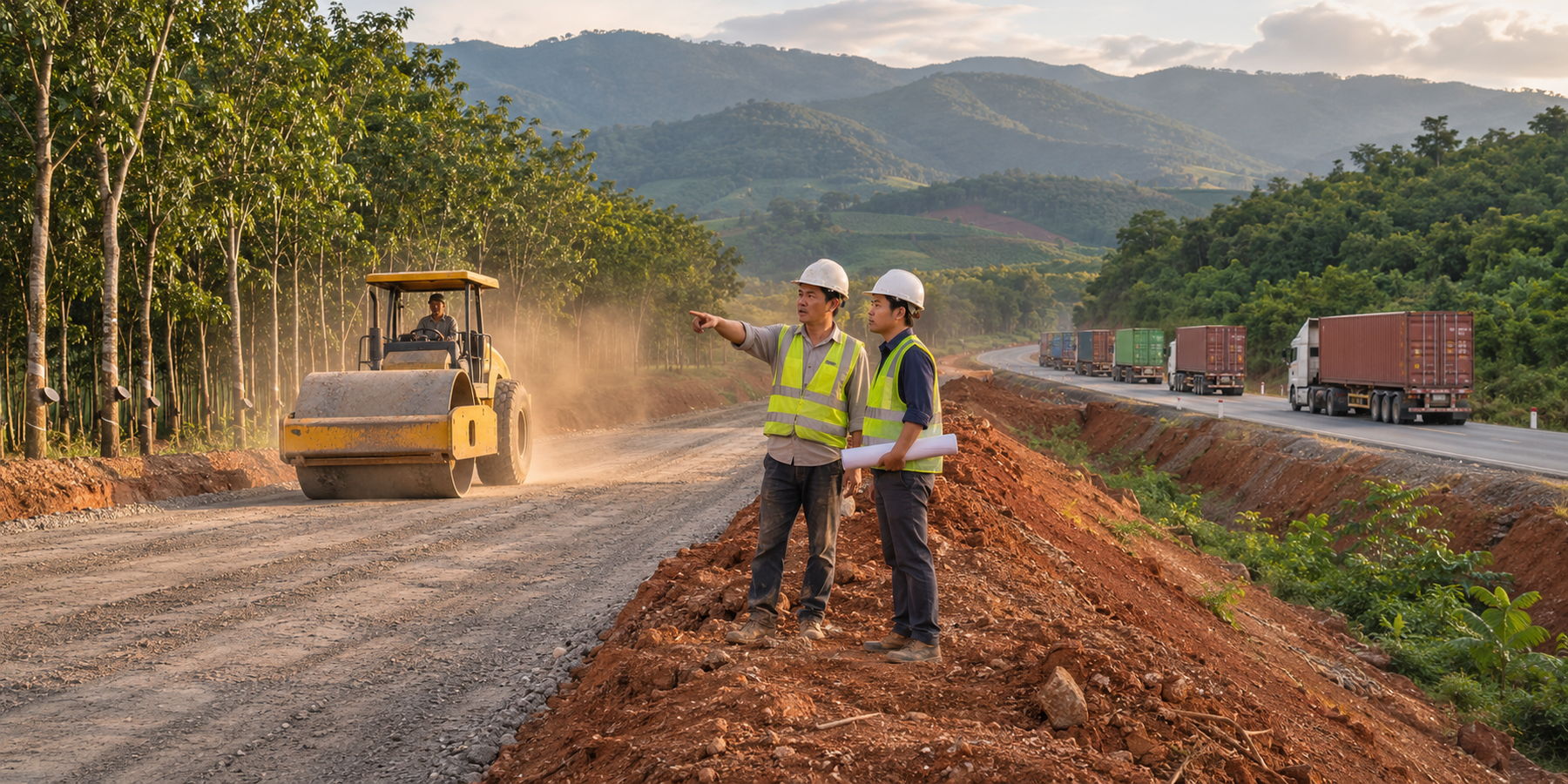
Transport & infrastructure
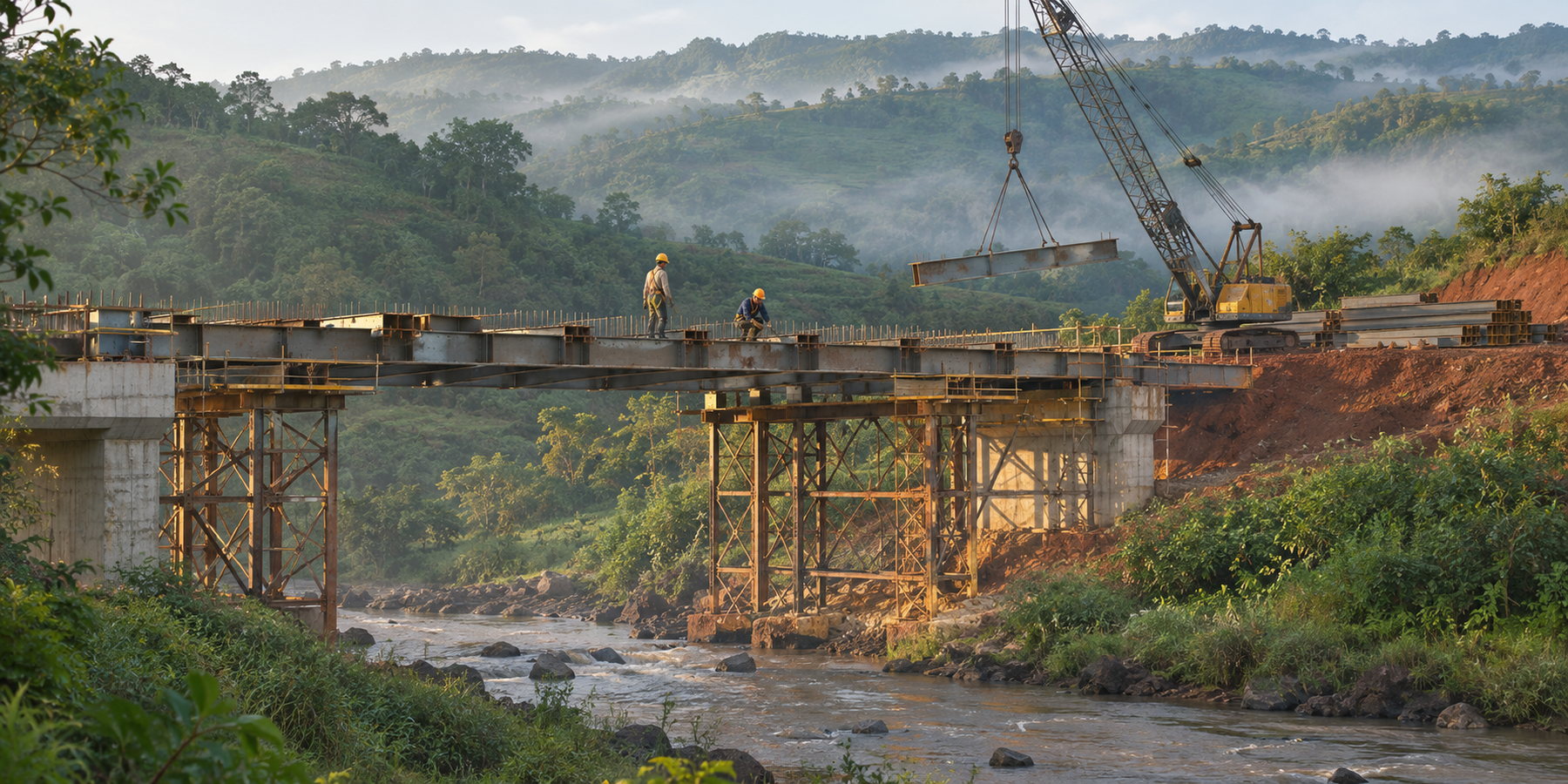
Participate in transport infrastructure, technical infrastructure and civil infrastructure in the local area.
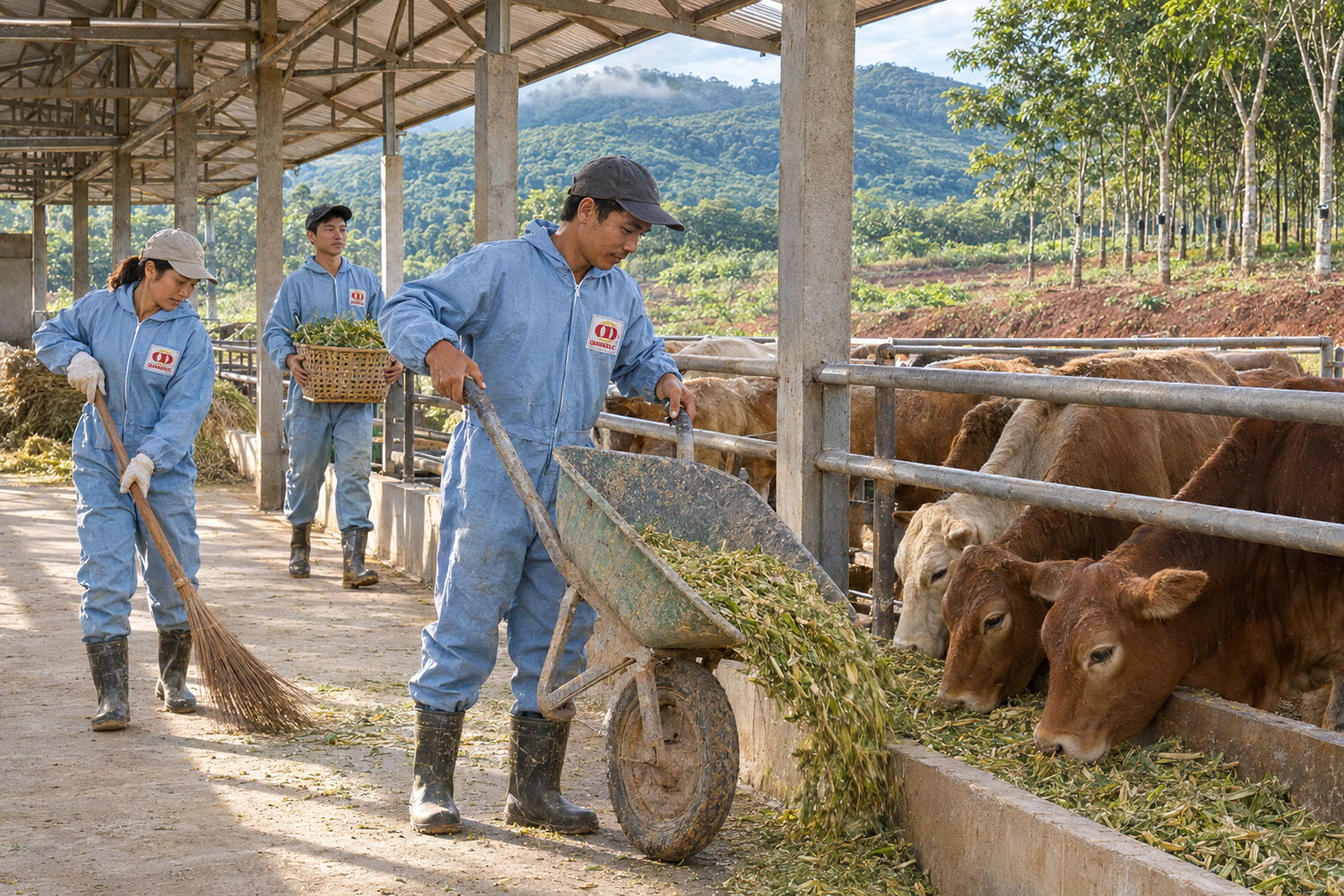
Biosecurity
Develop livestock farming towards improving production efficiency and quality control.
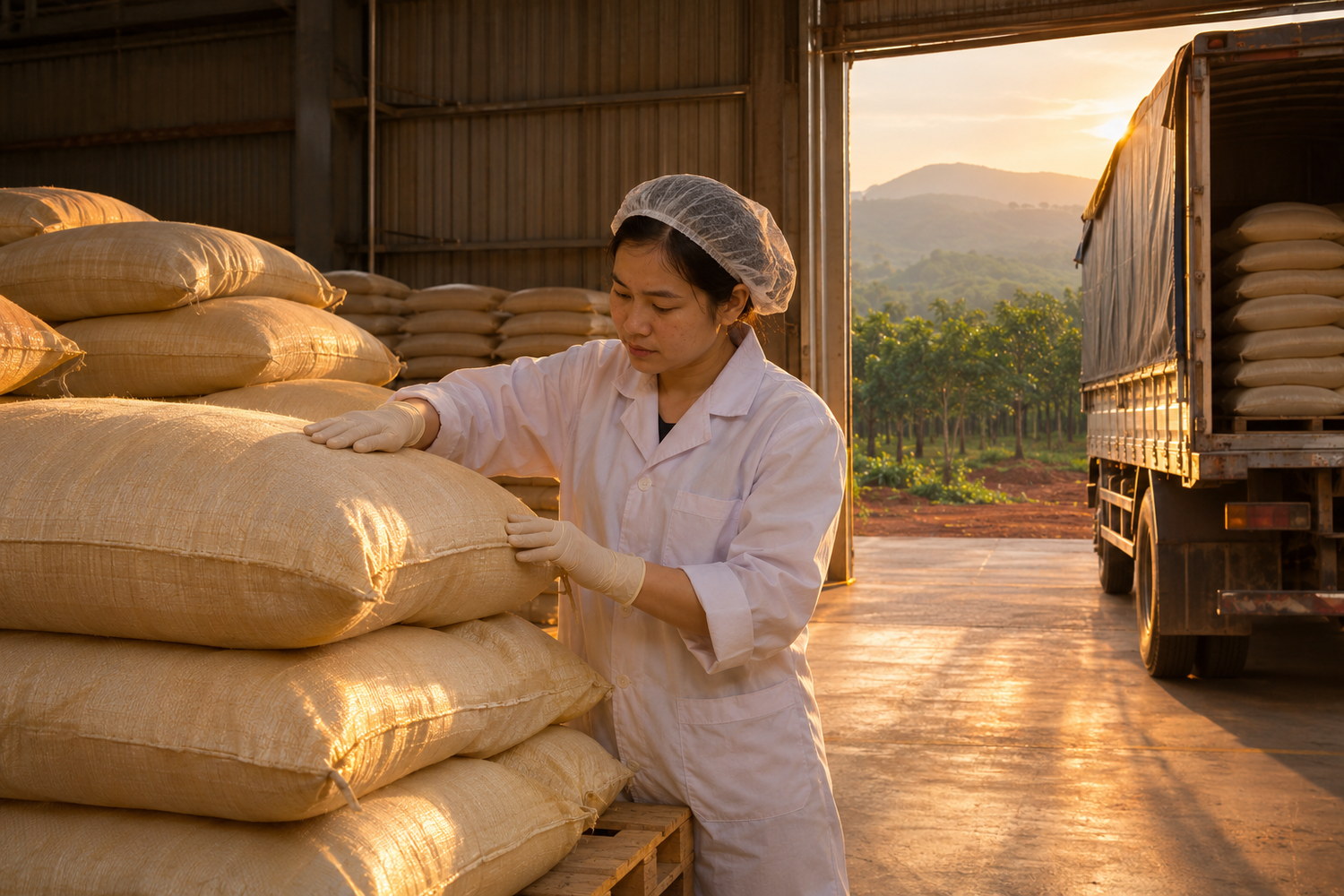
Processing & export
Connecting production activities with the market, from agricultural produce processing to transport and export.
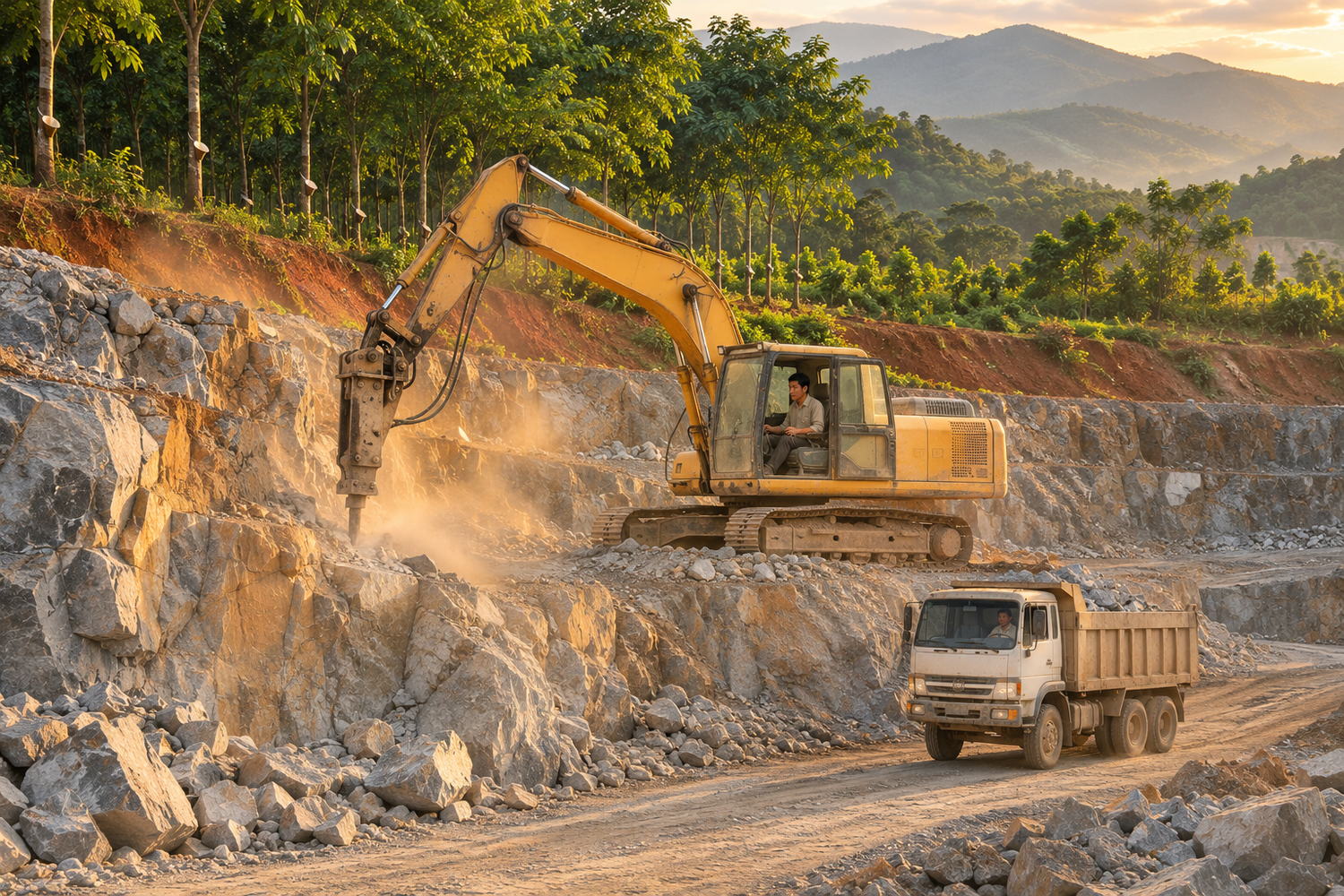
Construction materials
Mineral extraction and processing into construction materials, linked to local reserves and planning.
03Journey
Chairman of the Board and CEO Thai Hong Nhan served in the 332nd Division — a unit that planted and harvested rubber, today Army Corps 15. After leaving the army he returned to Pleiku and founded Quang Duc Import-Export Trading Co., Ltd. in 2000 with one trade only: growing, tapping and processing rubber.
The first raw material zone lay in the two border districts of Duc Co and Chu Prong. As the planted area grew, the company added annual crops and livestock, then transport infrastructure and energy. Every one of those businesses rests on local land, water and labour, so the wider the scale, the closer the tie to Gia Lai.
Production sits where the responsibility sits. Wherever a plantation, factory or workers’ village stands, the jobs, housing, classrooms and infrastructure stay in the same commune: 80 homes and a workers’ village at Ia Puch, a school for workers’ children, 219 ethnic minority workers trained as tappers. In recent years the company worked with the provincial Department of Industry and Trade to hand over five charity houses in Ma Giai village (Krong Pa), contributed VND 600 million to the province’s housing programme, donated VND 100 million to the Duc Co Covid-19 prevention fund, twinned with Goong village and lit its roads with 42 solar lamps.
The company has received the Labour Order three times — Third, Second and First Class; in 2010 its Chairman and CEO Thai Hong Nhan was awarded the Third Class Labour Order in the same round.
04Milestones
Established on 23 November 2000 in Pleiku with tax code 5900251291, starting from an agro-forestry processing project in Ia Bang and the first rubber zone in Duc Co and Chu Prong.
Started a 3,000 ha rubber project in Chu Prong: nearly 300 ethnic minority workers recruited and more than VND 10 billion invested in 80 homes at Ia Puch, forming the first workers’ village.
On 28 November 2010 the company received the Third Class Labour Order and inaugurated its head office at 40–42 Ly Nam De; the workforce passed 1,000, including 627 ethnic minority employees.
Raw material area passed 5,000 ha across 15 communes of the two border districts; 219 ethnic minority workers completed rubber tapping vocational training.
The Ho Chi Minh Road through the Central Highlands opened 663 km, with Quang Duc among the BOT investors of the route.
Signed a memorandum of understanding for the VND 100 billion Phu Dong interchange project at the Gia Lai Investment Promotion Conference.
Approved investment in a cassava starch processing facility in Ia Mo, extending the agri-processing chain beyond rubber.
Completed and opened the 30.6 km Pleiku bypass as part of a four-contractor consortium; trial sugarcane at Ia Pnon reached 90 tonnes per hectare.
The Pleiku bypass entered operation, easing traffic through the city; the fleet and construction crews were kept together to move on to the next projects.
Rubber processing plant handed over; Kon Tum province leased 255 ha of land for the Dak Mi 1 hydropower project in Dak Glei.
7,000 ha of rubber in production; the provincial government met the company on wind, solar and pig farming plans; construction began on the unbaked brick plant.
The multi-sector ecosystem completed: rubber, processing, energy, materials and infrastructure operating on one raw material base.
Sources: Business registration; Gia Lai, Dau Tu and Nha Dau Tu newspapers; Gia Lai and Kon Tum provincial governments (2000–2026). The company has received the Labour Order, Third Class (2010), Second Class and First Class in later periods.
Context
Gia Lai rubber lies within the country’s largest raw material zone. The province also has Quy Nhon Port and Le Thanh International Border Gate on the same transport axis as Pleiku, shortening the route to the sea for Central Highlands agricultural produce.
Source: Gia Lai Statistics Office, Department of Crop Production and Plant Protection, Gia Lai Department of Industry and Trade (2025–2026).
05On the ground
Most of the raw material zone and factories are located in the border communes of Duc Co–Chu Prong, where local labour is the main workforce. The company takes part directly through works and materials on site, alongside its financial contributions.
More than VND 10 billion for 80 homes, roads and power lines at the Ia Puch workers village.
> VND 10 bnRice for local households, support for relocating graves and for the Festival.
VND 352.5 mOpening the direct Pleiku – Hanoi flight.
VND 1 bnRemembrance and poor-household funds in Chu Prong district; district sports games and the Gia Lai newspaper cross-country run; a cultural welcome gate.
VND 51 mThe Gong Festival and the provincial emulation congress.
VND 300 mA Tet flower street; Agent Orange victims, child protection, the blind association and the provincial poor fund.
VND 90 mThe blind association and the Agent Orange victims association.
VND 7 mChu Prong, Duc Co and Chu Pưh districts received contributions to their Covid-19 prevention funds.
VND 400 mA wet-rice project in Ia Puch commune; the Gia Lai Culture – Tourism Week; child protection fund.
VND 720 mFive charity houses in Ma Giai village with the Department of Industry and Trade; the provincial and Chu Prong Fatherland Front; storm No. 3 recovery; restoration of a memorial.
VND 432.3 mTemporary housing replaced in Chu Prong and for the provincial Veterans Association; housing for poor households in Duc Co; storm No. 13 recovery; the provincial Border Guard command and the Ia Puch border post.
VND 1.21 bnLighting for Goong village with 17 gift sets; two houses in Triel – Ia Pnon village; monuments at Ia Pnon and Ia Lop; Tet Nhan Ai in Chu Prong; Lao students in Gia Lai; the great unity day at Ia Pnon.
VND 712 mBeyond the entries above, roughly VND 10 billion for houses in Chu Prong district, the provincial Veterans Association and Pleiku City is money the company raised from VietinBank and Vietnam National Petroleum Group.
Source: the company ledger of local contributions, 2009 – November 2026, cross-checked with reports in Gia Lai newspaper.
06Contact
Need a capability profile, product specifications, or to discuss a specific shipment?
Send a request to Quang Duc